
How Bench Warrants Work in Fillmore County
A bench warrant in Fillmore County is a judge's answer to something that did not happen. The most common trigger is a missed hearing, though an unpaid obligation, a broken release condition, or an ignored court-ordered step can bring the same result. The order tells an officer to bring the person before the court. It stays active until the judge changes it. The label matters too. Minnesota uses bench warrant and warrant for failure to appear, and it does not use the fine-collection terms you may have seen in other states. Knowing which instrument Fillmore County issued shapes what you ask the clerk and how you frame the fix.
Fillmore Bench Warrants Are District-Court Events
Fillmore County has no separate municipal or justice-of-the-peace criminal court. Every bench warrant here is a Fillmore County District Court matter. A city officer may have written the citation that opened the case, and a sheriff's deputy may serve the order later, but the issuing court sits in Preston and answers to the Third Judicial District. One point of origin is what keeps a Fillmore County bench warrant traceable. Follow the case number back to that court and you follow the warrant itself.
Bench Warrant Issuance in Fillmore County
Issuance is a paperwork event with a judge at the center. When a defendant fails to appear, the Fillmore County Attorney's office or court staff brings the failure to the judge, who may order a warrant on the spot. The form Minnesota uses for a summons or citation case records quite a bit. It lists the prior notice date, the offense, the court file number, and the command to the officer. It also states the basis for the order, the prompt-appearance requirement, and any bail or conditions. The failure-to-appear warrant form shows the fields a Fillmore County judge works from when signing a bench warrant.
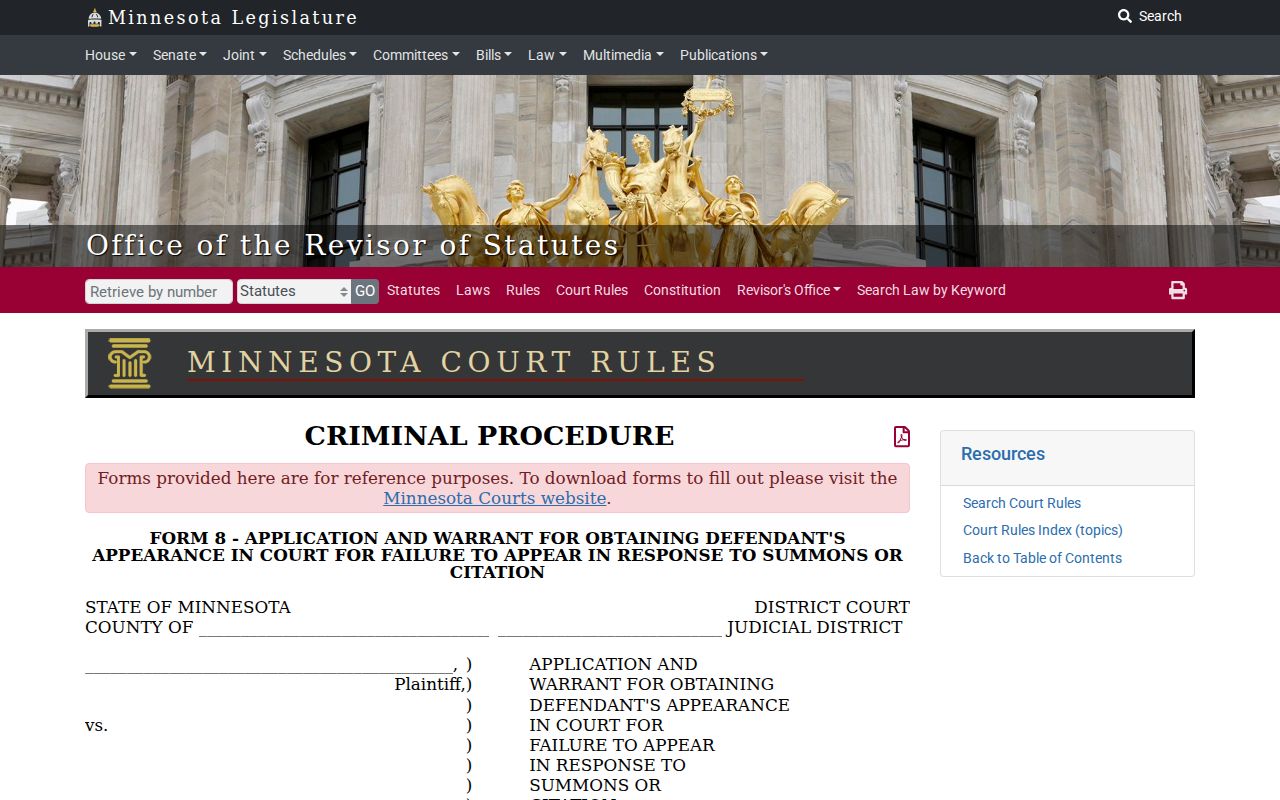
Read that form before a court call about a Fillmore County case. It makes the right question easier to ask.
Fillmore Bench Warrant Triggers
Not every missed obligation produces the same instrument in Fillmore County. A plain failure to appear usually yields an ordinary bench warrant that authorizes an arrest. Break a release condition and you get a release-condition warrant. A narrow group of first failures to appear, where a mailed summons came back undeliverable, can fall under Minnesota Statutes 629.415. That route requires notice and release instead of arrest, and it sets no bail. So the trigger alone does not tell you the instrument.
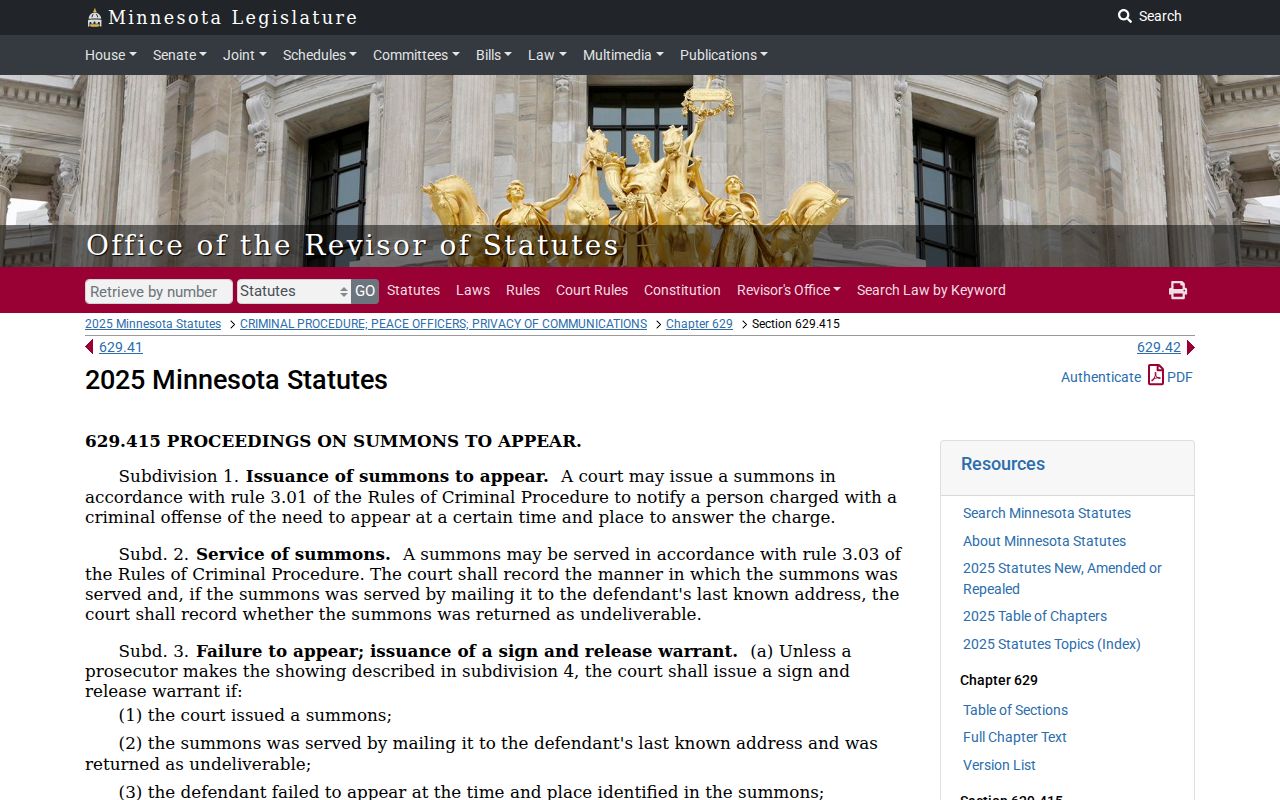
That statute carries exclusions and a safety exception. Confirm the warrant type with the Fillmore County court.
How Fillmore Bench and Arrest Warrants Differ
Bench and arrest warrants look alike on a Fillmore County case screen. In practice they behave differently. One answers a court-process failure; the other answers a criminal charge backed by probable cause. Assume the wrong one and you misjudge everything that follows, so check which warrant Fillmore County actually issued.
| Point of comparison | Bench warrant | Arrest warrant |
|---|---|---|
| What starts it | A missed hearing, a violation, or an ignored order | Probable cause shown on a complaint or affidavit |
| Who issues it | Fillmore County District Court judge | Fillmore County District Court judge |
| What it authorizes | Custody and a prompt appearance, unless it is a sign-and-release warrant | Custody on the charge, with a prompt appearance |
| How it usually ends | A recall, a bond, or an appearance | A bond, an appearance, or resolution of the charge |
Fillmore's Red W and the Issuing Case
The Active Warrant marker in Minnesota's case system attaches to a person, not to a file. The Judicial Branch says the flag may or may not relate to the case on screen. So a red W that pops up in a name search can point at the wrong Fillmore County case. Open each case. Read its Register of Actions. Match the warrant event to the right file before you draw any conclusion about a Fillmore County warrant.
Clearing a Bench Warrant in Fillmore County
Clearing a bench warrant means getting the judge to withdraw it. That only happens after the underlying problem is addressed. Some judges want an appearance. Some accept a lawyer's motion. Others will recall the warrant once a bond is posted or a payment made. No local walk-in surrender schedule is published, so the first step in Fillmore County is always a call to the court.
Do not ignore it: A Fillmore County bench warrant does not expire on its own. An unpaid fine or a missed date can grow into a new charge, added penalties, or a license consequence.
- Call Fillmore County District Court Administration at 507-765-6021 and confirm the case number and current status.
- Ask what a Fillmore County judge requires: an appearance, a payment, a surrender, or a motion from a lawyer.
- Talk to a lawyer about a recall or quash motion, especially if the missed date had a reason the court has not heard.
- If a bond applies, confirm with the Fillmore County Jail where and how it is posted before traveling to Preston.
Fillmore Bench Warrants and Capias Terms
Newcomers from Texas sometimes ask about a capias pro fine, a fine-collection writ used in some court systems. No Fillmore County or Minnesota source uses that label, and no local fine-collection portal exists. For an unpaid fine, the Minnesota route runs through the citation, the Fillmore County District Court case, and the Court Payment Center instead of any capias. Ask the Fillmore County clerk about the case, not the writ.
- Bench warrant
- The Minnesota term for a Fillmore County warrant issued after a missed court obligation.
- Warrant for failure to appear
- The official phrase for a bench warrant triggered by a missed hearing.
- Capias pro fine
- A fine-collection writ used in some states; not a Fillmore County term.
- Prompt appearance
- The requirement that an arrested person be brought before a Fillmore County judge without delay.
Fillmore County Courts That Issue Bench Warrants
One court covers the whole county for criminal and traffic matters. That is Fillmore County District Court at 101 Fillmore Street E. in Preston, part of the Third Judicial District. Juvenile matters stay with the Fillmore County District Court but carry restricted records. Federal warrants belong to an entirely different system. There is no city criminal court in Fillmore County to check on your own.
Fillmore Bench Warrant Surrender: Call First
Fillmore County lists no walk-in surrender steps at all. No identification rule or booking schedule has been published either. A voluntary surrender is still possible in Fillmore County, though the courthouse and the jail do different jobs. A Fillmore County clerk does not take custody. No jail employee can undo a court warrant. Call first and settle the terms. Under Minnesota guidance, a lawyer can contact the Fillmore County District Court, request a recall or return hearing, and arrange the surrender itself.
Fillmore Bench Warrant Access Limits
A bench warrant record occupies a middle ground. It is more open than a search warrant and less open than a roster, and the access rules draw that line. Public Fillmore County files can be inspected during regular hours. Copies may carry a fee, and remote access stays narrower than what a courthouse terminal shows. The public-access rule text covers inspection, copying, and the limits on remote records.
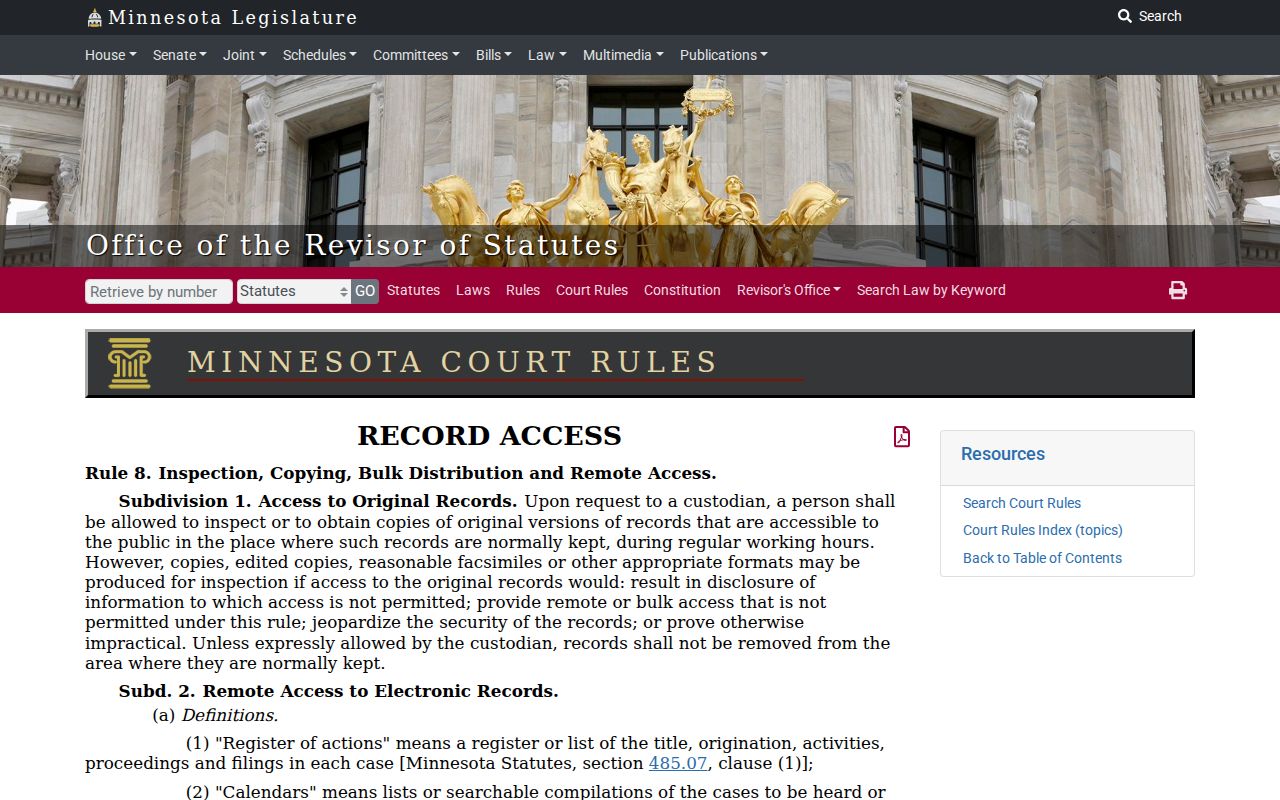
That rule puts some Fillmore County details online. Others still require a trip to the Fillmore County Courthouse. The Minnesota Judicial Branch guidance on case coverage explains the separate treatment of search warrants.
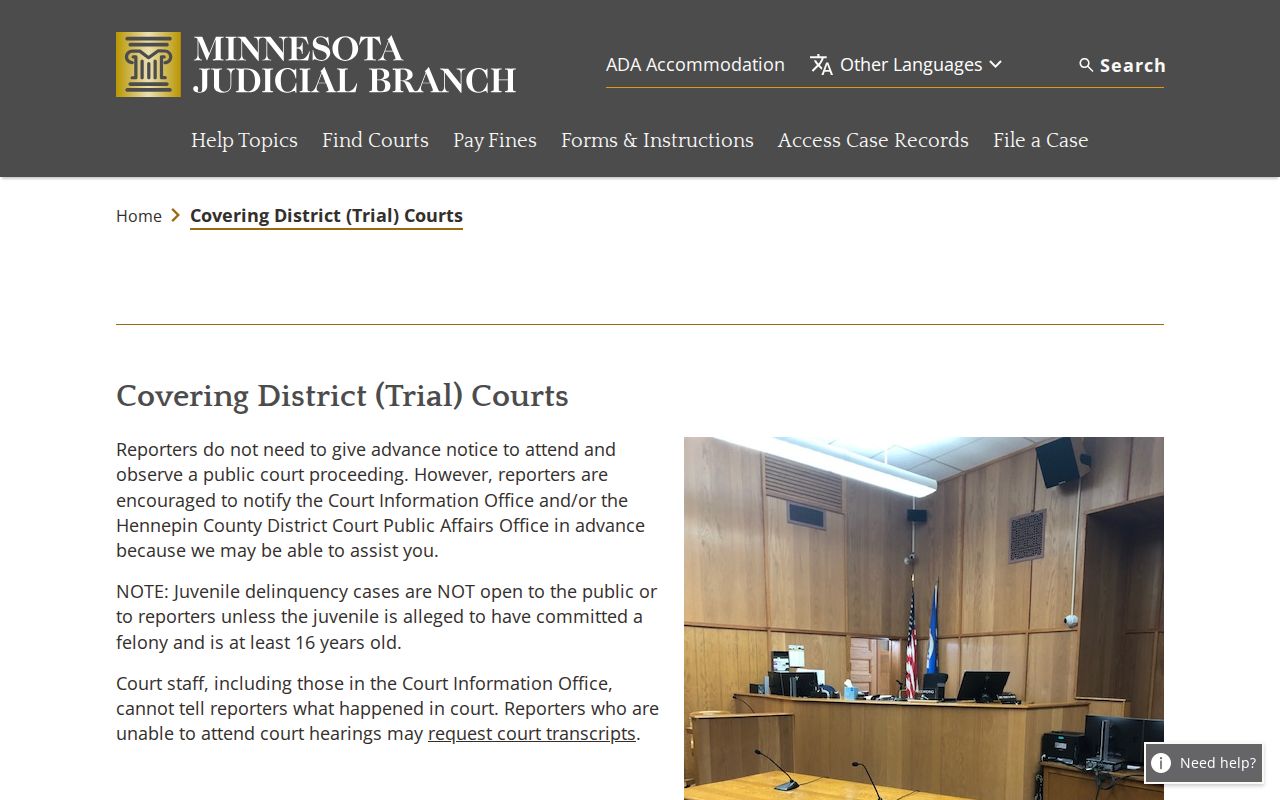
Search warrant filings stay out of the online system. They can be viewed at the Fillmore County Courthouse terminal and are sometimes sealed.